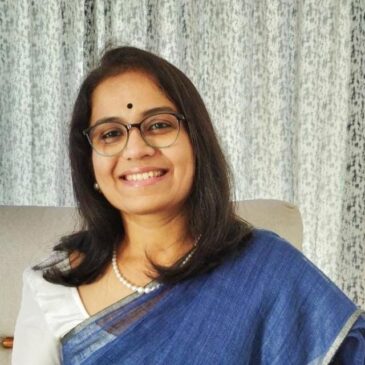
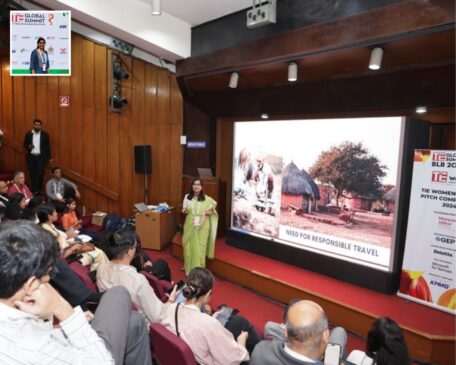
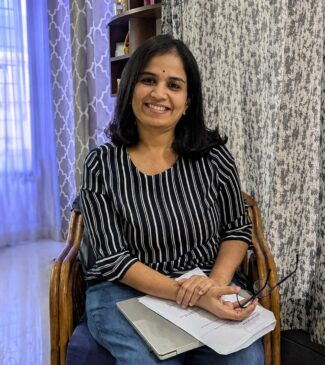
At Brilliant Read Media, it is our constant endeavour to identify and share some of the unique and compelling stories from the startup ecosystem. As part of this, we invited Subini Sasidharan Nair for an interview with Brilliant Read Media. To say further, Subini is an Entrepreneur and Founder & CEO at Think Trawell Tourism & Tech Pvt Ltd. Let’s learn more about her background, inspiring journey so far and her advice for our growing community!
Excerpts from our exclusive interview with Subini:
What inspired your transition from corporate roles to building a more personal, experience-led travel venture?
I grew up in two worlds, and it was the ‘in-between’ that shaped everything.
I started in conventional corporate roles in banking with HSBC, sales in an FMCG segment MNC, marketing in the shipping industry, disciplined and driven, yet always feeling something was missing.
Rooted in a farming family of quiet social entrepreneurs, I felt a sense of purpose during my interactions here, wherein there was much honesty and hard work that received neither recognition nor fair financial value.
That led me to agricultural engineering and later a master’s in international business, searching, perhaps, for a framework that could hold both worlds together. Yet without the right mentorship, I drifted, performing well in a transactional world while losing sight of my purpose.
Later, when I co-founded a community tourism venture in Kerala, I realised that tourism, designed with communities rather than for them, could become a powerful tool for dignity, livelihood, and cultural preservation. These weren’t “attractions”; they were keepers of wisdom and custodians of ecosystems.
My work in government in e-governance added another dimension, teaching me what it truly means to design for the last mile, to build systems that serve people who are rarely consulted.
Together, these chapters; corporate rigour, community rootedness, and public service, fundamentally rewired how I think about business, leadership, and building organisations with soul. Above all, they brought me back to purpose. Sometimes that’s all it takes to nurture the seed of a dream; not by anyone handing you over a map, but by quietly showing that you already have what it takes to find your own path.
ThinkTrawell is the curation of those dreams. In a world where travel has increasingly become transactional, faster bookings, cheaper packages, and more destinations ticked off a list, we are building deliberately in a thoughtful direction.
We are more than a travel company. We build our platform not to just commodify experiences but to deepen them, that connects travellers not just to places but to the people, stories, and ecosystems that make those places alive. For communities, for curious travellers, and for the perspectives they build in each other, including my own.
How do you measure success in social entrepreneurship – especially in models like community tourism where impact is intangible?
This is a question I wrestle with, honestly. Conventional metrics of revenue, footfall, conversion rates, etc., can tell only part of the story. At ThinkTrawell, we look at a different set of indicators.
Has a local artisan found a new market for their craft? Did the village homestay owner gain confidence to tell their own story in their own words? How many travellers might have returned home, becoming more curious, more empathetic, better connected to the planet? Those shifts are real, even if they don’t fit neatly into a spreadsheet. But they make stories of success.
We also pay attention to community agency. Do the people we work with have the space to make decisions, or are they just following instructions? When a community partner says, “we want to change this portion of the itinerary proposed, because it doesn’t reflect us well,” that’s success. It means they own the narrative.
Impact in social entrepreneurship is often slow, cumulative, and deeply human. We have made peace with the fact that some of our best work might not show up in an annual business report, while the real stories will attract more travellers.
Responsible tourism is often overused. What does it look like in real, operational terms at ThinkTrawell?
Yes. “Responsible tourism” has become a branding tool for many, only a checkbox.
At ThinkTrawell, we try to be very operational and honest about it. It is an everyday question within the organisation as well the people we work with. Communication has a major role here, for travellers as well as for the experience providers and collaborators.
When we design an experience, the people have a seat at the table from day one, not as an afterthought. We don’t romanticise poverty or turn vulnerable communities into spectacles for curious travellers.
Responsible tourism for us is building mutual respect to the places we go and the people we engage with as travellers. It is fundamentally about power; who holds it, who should, and how we consciously redistribute it.
This involves guidelines for service providers, hosts, as well as for travellers and urging the thoughtful consumption of resources among all. Meanwhile, due care is given that the comfort and convenience of both the traveller and the service provider are not compromised either.
ThinkTrawell envisions connecting, collaborating, and empowering the authentic and responsible ventures in tourism globally.
What has been your toughest challenge as a social entrepreneur, and how did you navigate it without compromising your core values?
The toughest challenge is always sustaining the venture financially while refusing to take shortcuts that would dilute the model. It is possible that a well-funded conventional tourism operator would have made decisions that were quickly profitable.
Continuously selling regular packaged itineraries would have shown bigger numbers on the books, and it remains a stream we will grow into. But we were consciously focused on laying the foundation first, structuring a network of experience-based tourism that required patient groundwork. Identifying the right collaborations, building trust, recognising and designing authentic experiences; none of that happens quickly.
That kind of groundwork took time. It would have meant scaling without depth otherwise. The term “scaling up quickly” challenges your model every day while we interact with the business ecosystem. It is a quiet, everyday practice to align what I learn from traditional schools of entrepreneurship with my dream and the organisation’s vision.
What helps me navigate is absolute clarity on my non-negotiables; the things ‘I would not do’, no matter the commercial pressure, backed by a leadership team and family who carried that as a shared conviction, anchoring every difficult business decision to it. I also lean heavily on my network of fellow social entrepreneurs and mentors who understand that slow, values-aligned growth is not failure.
What unique challenges have you faced as a woman entrepreneur, and what systemic changes are still needed?
Thanks for this question. The challenges are layered and often invisible. The most persistent one is credibility, the quiet, unspoken assumption that a woman-led venture is a passion project until proven otherwise.
When conversations among men in the room are often filled with mere numbers that look attractive, making them more important or brilliant, mostly women entrepreneurs like me are keener on prioritising the word of impact over the realistic big numbers, even though we equally show it up.
Women entrepreneurs are also doubted for consistency, as they have family responsibilities seen as a constraint. Over the years, I’ve learned not to take it personally but to address it directly through results and presence.
Raising funds as a woman social entrepreneur in a sector like sustainable tourism, which is neither glamorous tech nor high-margin hospitality, is genuinely difficult. The TiE Global summit recognition in 2024 helped in ways I didn’t fully anticipate. It gave ThinkTrawell a kind of external validation that opened doors.
Systemically, what we still need are more forums, especially in various domains of entrepreneurship, that nurture the leaders within every woman entrepreneur like me, and more women in investment rooms who understand what it means to back a dream that comes from lived experience.
We need evaluation frameworks for funding that look beyond the conventional growth metrics. We need inclusive mentorship ecosystems that are accessible beyond metropolitan cities with a wider bandwidth in approach. And honestly, we need society to stop treating women who choose entrepreneurship over jobs as either exceptions or heroes. It should simply be normal.
For me, it already is. ThinkTrawell has four women in our team of seven and when we sit in a room together, the conversation holds both the numbers and the people, the revenue and the impact. We don’t see them as opposites.
How did your experience in e-governance and working with government systems influence your approach to building your scalable venture?
The time I worked in the leadership role with the Govt of Kerala’s e-Governance Services was one among the most formative of my life. It provided me with practical lessons in policy-making and execution, insights on how power and its conflicts can help or defeat the process.
I learned how to work at scale with limited resources across complex stakeholder ecosystems. Systems fail people not because of bad intent but because of a design that doesn’t account for ground reality.
One project that stays with me is enabling Aadhaar enrollment for bedridden and differently abled citizens at their doorstep on a pilot basis in Kozhikode. No new budget. No new infrastructure. Just thoughtful coordination; consciously converging departments, aligning limited resources, and the right policy intervention at the right time.
Making it happen meant navigating deeply hierarchical structures and building trust across teams that spoke less to each other. When it worked and was extended to further geographies, I understood something important,that within even the most rigid systems, there is room to move, if you are patient, persistent, and genuinely focused on the person at the end of the chain.
That lesson is deeply embedded in how I build at ThinkTrawell. We don’t design for the ideal traveller or the ideal community. We design for friction, for gaps, for the person with poor connectivity or limited digital literacy.
Government experience also taught me the power of convergence; nothing scales alone. Every impactful project I’ve been part of while there succeeded because multiple stakeholders aligned. I have tried to build that convergence into ThinkTrawell’s model from the very beginning.
How do you ensure communities are equal stakeholders and not just beneficiaries when it comes to community-based tourism projects?
The line between ‘stakeholder’ and ‘beneficiary’ is thinner than it appears, and crossing it in the wrong direction is easy. In our CBT projects,our approach ensures that communities are present at the table where decisions are made and are not invited in after the product is designed, not consulted as a courtesy. The experiences are co-created.
The process starts with listening, not pitching. We ask the people what they want to share, what they want to protect, and equally important what they do not want to show. The method is the same whether we engage among the farmers in Kerala or Tamil Nadu, or among the tribal regions of Andhra Pradesh. This is ensured when we collaborate with already developed models in other regions of the country.
Transparency is the key. Community members know exactly what they earn from every booking, every experience, every engagement. There are no vague goodwill gestures or post-season settlements. When people understand economics, they engage as owners, not performers.
We work on equipping the community members to tell their own stories in their own words, their own language, their own rhythm, but at the same time, effectively translating the basic needs and guidelines to follow being hosts in tourism. A place that can speak for itself holds its own stake.
How does your identity as an artist, actor, lyricist, storyteller influence your leadership and the way you design travel experiences?
The language of leadership here is different. As an artist, I am trained to listen; really listen to what is not being said. In theatre, you read subtext. In storytelling, you understand that the most powerful narratives are found, not invented. That sensibility shapes how I work with people. I don’t go with a script. I go with curiosity and let the place tell me what it wants to be known for.
Our experiences at ThinkTrawell are essentially curated stories; they have an emotional arc, a texture, a voice. As a leader, being an artist means I am comfortable with ambiguity, with the messy middle of creative processes.
I value the team member who brings an unexpected idea as much as the one who delivers efficiently. My role, as I see it, is not to direct from the front but to provide the stage to create the conditions where my team can perform, contribute, and shine in their own right.
I understand that a traveller’s most memorable moment is rarely the itinerary item; it is the unrehearsed, human, unscripted encounter. At ThinkTrawell, we try to create the conditions for those moments. This approach helps us to be professional and fair across the length and breadth of our engagements.
What major shifts do you foresee in the tourism industry over the next decade -especially around sustainability and technology?
Yes, I do see significant shifts. First, the one-size-fits-all mass tourism as we know it is no longer becoming an attraction. It is not because tourists will become more virtuous, but because destinations will increasingly assert limits. Second, technology will move from being just a booking engine to being a meaning engine.
AI and immersive tech will be used not just to plan trips but to deepen understanding of culture, of ecology, of history. Third, and most important, I believe we will see a genuine rise in “slow travel”, not as a niche lifestyle choice but as a mainstream aspiration, driven by a generation that has grown up with climate anxiety and a hunger for authentic connection.
ThinkTrawell is building in this direction. We curate experience-based tours across India and select regions outside the country, manage and connect to ecostay bookings across the country, build awareness on responsible tourism and work on developing more community-based tourism projects.
The tourism businesses that will thrive are those that can marry depth with accessibility, and technology with human warmth. The ones that treat local people as partners will outlast those that treat them as just content. This has the power to fundamentally reshape the industry.
What kind of impact or legacy do you want your work to leave on the people, places, travellers, and the tourism ecosystem?
The work we do at ThinkTrawell is not limited to scale. I want our villages to be proud of their culture, communities to look back and say, they came, they listened, they didn’t take more than they gave.
I want travellers to say that the journey changed something in us, it made me more curious about the world, more grateful to be alive in it, and somehow, more at home within myself.
And I want the tourism ecosystem to look at ThinkTrawell as proof that a model built on equity, ethics, and authenticity is not just possible; it’s viable, it’s scalable, and it’s more resilient than the extractive alternatives.
When I think about legacy, what I really hope for is this: I want the next generation of social entrepreneurs from smaller cities, from non-metropolitan India, especially women, to know that you don’t need to be in Bangalore or Mumbai, or carry a degree from a premier institute, to build something that matters to the world.
Where you come from is not a limitation. It is the foundation.
At BrilliantRead, we don’t just share startup stories—we bring you journeys that challenge perspectives, spark ideas, and fuel ambition. Every story we feature is carefully chosen to add real value, inspire action, and ignite possibility within our growing community of entrepreneurs and dreamers.
If you have a powerful story—one that can inspire, educate, or create impact—we want to hear from you.

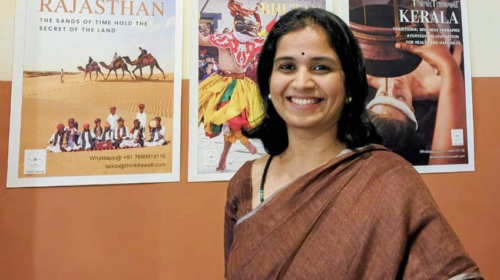
 How do you measure success in social entrepreneurship – especially in models like community tourism where impact is intangible?